
Underground Mine Ventilation: Why Airflow Matters to Gold Investors
Ventilation is easy to overlook when reviewing an underground gold project, yet it can influence safety, production capacity, capital spending, and operating costs. A mine needs controlled airflow to deliver fresh air to active workplaces and remove diesel exhaust, blasting fumes, dust, heat, and other contaminants. If the system cannot support the planned fleet and work areas, the mining schedule may be constrained even when ore is available.
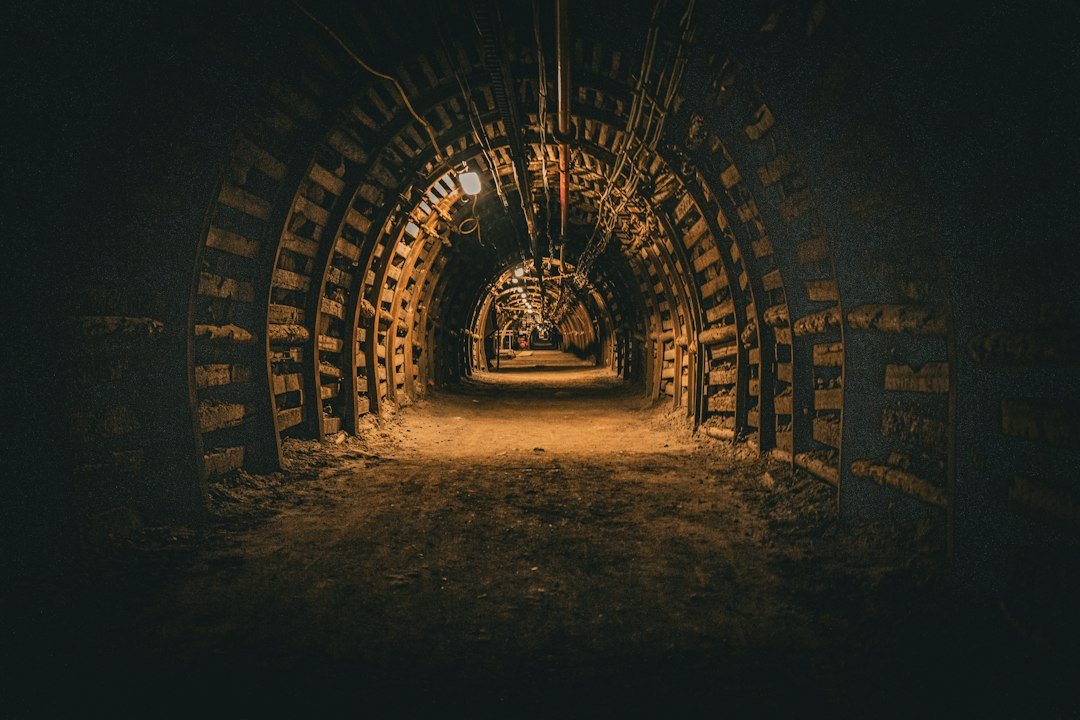
What a Ventilation System Does
Primary fans move air through major intake and return routes, while raises, shafts, doors, regulators, and stoppings direct it around the mine. Auxiliary fans and ducting carry fresh air to development headings and other workplaces outside the main airflow. Deeper or hotter mines may also require refrigeration or air cooling.
The health purpose is fundamental. NIOSH’s mining guidance, reviewed in January 2025, identifies diesel particulate matter and toxic gases among the respiratory hazards found in mines. The agency emphasizes engineering controls, monitoring, and operating practices that reduce exposure. In the United States, 30 CFR Part 57 contains the federal safety and health standards for underground metal and nonmetal mines, including air-quality and diesel-particulate requirements.
Why Airflow Can Limit Production
Ventilation demand depends on the number and power of diesel units, the location of active headings, contaminants, heat, blasting cycles, leakage, and local rules. Adding trucks or opening new mining areas can therefore require more than equipment purchases: the mine may need larger fans, new return-air raises, electrical upgrades, or additional cooling.
A dated but useful real-world illustration appears in the 2020 SEC-filed Brucejack technical report. Its ventilation design calculated airflow for diesel equipment and fixed facilities, then added an allowance for leakage and balancing. The example shows why investors should assess the complete network rather than a single fan rating. It does not imply any affiliation with GBDS.
Costs, Redundancy, and Mine Depth
Ventilation creates both capital and operating demands. Shafts, raises, fans, substations, ducting, controls, and refrigeration can require substantial development. Electricity and maintenance continue throughout the mine life. As workings deepen or extend, airway resistance, heat, and travel distance can increase, potentially requiring staged expansions that should appear in the life-of-mine plan.
Investors should also examine redundancy. A design that depends on one critical fan, power feed, or return airway may be vulnerable to unplanned outages. Spare capacity, backup power, condition monitoring, access for maintenance, and alternative airflow paths can improve resilience, but they also add cost.
Hypothetical Capacity Example
Assume a hypothetical mine requires 360 cubic metres per second of airflow for its scheduled equipment and workplaces. The installed system is expected to deliver 400 cubic metres per second. If an outage or network restriction reduces effective airflow by 15%, available flow falls to 340 cubic metres per second—20 below the requirement. Management may have to reduce diesel activity, close a work area temporarily, or change the schedule. This simplified example is not a project forecast and does not account for site-specific regulation or engineering.
Investor Due-Diligence Questions
Ask whether airflow calculations match the actual fleet and development schedule; whether heat, blasting fumes, dust, and diesel emissions are modeled by area; how leakage and future depth are treated; which components are single points of failure; and whether fan, raise, cooling, and power expansions are included in capital estimates. Review actual airflow, contaminant monitoring, energy use, fan availability, and production interruptions against plan.
The Investor Takeaway
Ventilation is not merely a compliance item. It is operating infrastructure that can determine how many headings and machines a mine can use safely at one time. A credible plan connects ventilation capacity, mine depth, fleet choices, monitoring, redundancy, capital timing, and the production schedule.
Educational disclaimer: This article is for general information only and is not investment, legal, tax, safety, or engineering advice. Mining projects involve geological, operational, financing, permitting, environmental, commodity-price, and execution risks. Conduct independent due diligence and consult qualified professionals before making investment decisions.