

Gold Assay QA/QC: How Investors Can Test Confidence in Reported Grades
A gold grade is only as dependable as the sampling, preparation, laboratory work, and data controls behind it. Assay quality assurance and quality control—usually shortened to QA/QC—helps technical teams identify contamination, analytical bias, poor repeatability, sample mix-ups, and other problems before results are used in a mineral-resource estimate or investment presentation.
What the main controls are designed to detect
Blanks are samples expected to contain little or no target metal. They help reveal contamination during crushing, pulverizing, handling, or analysis. A blank reporting unexpected gold does not automatically invalidate an entire program, but it should trigger a documented investigation into where contamination may have occurred.
Certified reference materials, often called standards, contain independently established concentrations. Comparing the laboratory result with the certified value helps detect analytical bias or drift. Standards should cover grade ranges relevant to the deposit; a low-grade standard alone may provide limited evidence about high-grade performance.
Duplicates test precision. Field, coarse-reject, and pulp duplicates examine different stages of the sampling and preparation process. Natural gold can be distributed unevenly, so duplicate variability may reflect geology as well as laboratory performance. Investors should ask whether the project explains the cause instead of treating every variance as a laboratory failure.
Check assays send selected material to a second laboratory. Independent checks can identify systematic differences between laboratories, but their value depends on sample selection, chain of custody, analytical method, and whether discrepancies are investigated.
Good QA/QC begins before the laboratory
Even precise analytical equipment cannot correct a nonrepresentative sample. Core recovery, sample intervals, cutting procedures, bag labels, security seals, storage, transport, crushing size, pulverization, and retained material all matter. A reliable program maintains traceable sample identifiers and records custody from the drill site through final reporting.
The CIM Mineral Exploration Best Practice Guidelines recommend external blanks, certified reference materials, duplicates, and regular third-party check sampling. They also recommend disclosure of QA/QC results for early, discovery, and delineation-stage exploration programs.
What current technical reports show
Real programs use different insertion rates based on project stage, deposit style, and risk. A 2026 SEC-filed Cascar technical report describes blanks and reference materials at approximately one per 20 samples, reverse-circulation duplicates at one per 25, and interlaboratory checks at one per 10. A 2025 CK Gold Project technical report also describes inserted commercial blanks and reference materials. These are external examples, not universal minimums and not GBDS projects.
The most useful disclosure goes beyond listing control samples. It reports failure limits, charts results over time, explains corrective action, identifies excluded batches, and states whether the qualified person considers the database suitable for its intended use.
A hypothetical insertion example
Hypothetical example: an exploration program submits 1,000 primary samples and adds 50 blanks, 50 standards, and 50 duplicates. The laboratory therefore receives 1,150 samples, of which 150—or about 13%—are controls. If three blanks exceed the project’s failure threshold, the key questions are where they appeared in the sequence, what samples preceded them, whether affected batches were reanalyzed, and whether the root cause was documented. The percentage alone does not determine data quality.
Investor questions and warning signs
Ask which laboratory and analytical method were used; whether the laboratory is independent and appropriately accredited; who selected and inserted controls; how high-grade or over-limit results were handled; and whether historical data were validated. Warning signs include missing chain-of-custody records, unexplained control failures, changing procedures without reconciliation, selective disclosure of successes, or resource estimates that rely heavily on unverified legacy assays.
The investor takeaway
QA/QC does not guarantee that a deposit will become an economic mine. It provides evidence about whether reported grades are accurate and precise enough for the decisions being made. Investors should evaluate the full control system, the failure response, and the qualified person’s conclusions—not merely the presence of blanks, standards, and duplicates.
This article is for educational purposes only and is not investment, legal, geological, or technical advice. Mining investments involve exploration, estimation, commodity-price, financing, environmental, and jurisdictional risks. Conduct independent due diligence and consult qualified professionals.
Gold Project Joint Ventures and Earn-Ins: What Investors Should Examine
Gold projects are often advanced by more than one company. A property owner may contribute mineral rights while another party supplies exploration funding, technical staff, processing access, or development expertise. Joint ventures and earn-in agreements can spread risk and reduce the amount of capital one company must provide—but they can also separate economic ownership from operational control.
How an earn-in becomes ownership
An earn-in normally gives a participant the right to acquire a project interest by completing defined obligations. These may include cash payments, exploration expenditures, drilling targets, technical studies, or milestone payments within specified deadlines. Ownership may be earned in stages, and the agreement should explain what happens if a milestone is late, incomplete, or disputed.
A current SEC-filed example appears in Golden Minerals’ 2025 annual report. It says the company satisfied earn-in requirements through approximately $3.0 million of expenditures, including drilling conducted from 2020 through 2023, and then formed a joint-venture company in which it holds 51%. The example shows why investors should distinguish announced spending from an interest that has actually vested.
Ownership does not always equal control
The operator typically manages budgets, contractors, technical work, safety systems, and reporting. A minority partner may receive economic exposure without controlling daily decisions. For example, a June 15, 2026 SEC-filed release describes Nevada Gold Mines as 61.5% owned and operated by Barrick, with Newmont holding 38.5%. That is an external industry example, not a GBDS affiliation.
Investors should review management-committee voting, reserved matters, approval thresholds, information rights, audit access, related-party transactions, and procedures for replacing the operator. A strong operating partner can add capability, but concentrated control can also leave a minority owner dependent on another company’s schedules, estimates, and priorities.
Cash calls can change the risk
After an interest is earned, partners may need to fund approved programs in proportion to ownership. IAMGOLD’s 2025 results filing states that the Côté Gold unincorporated joint venture requires partners to fund two months of future expenditures in advance, with cash calls made at the beginning of each month. The mechanics vary by agreement, but the liquidity lesson is broad: ownership can create recurring obligations before revenue is received.
If a partner does not fund, the agreement may permit dilution, partner loans, default interest, loss of voting rights, or eventual forfeiture. Newmont’s 2025 Form 10-K also identifies joint-venture funding requirements as a risk that may increase costs and capital expenditures or delay activities.
A hypothetical funding illustration
Hypothetical example: assume Partner A owns 70% and Partner B owns 30% of a project that approves a $20 million program. Their proportional contributions would be $14 million and $6 million. If Partner B can provide only $2 million, the $4 million shortfall could lead to a loan, dilution, or another contractual remedy. The result cannot be inferred from ownership percentages alone; it depends on the signed agreement.
What investors should verify
Start with the underlying agreement and amendments, not only a presentation summary. Confirm which expenditure categories qualify toward the earn-in, when title transfers, who operates, which decisions require unanimous approval, how budgets are approved, and whether affiliates may provide services. Examine cash-call timing, dilution formulas, transfer restrictions, rights of first refusal, deadlock procedures, withdrawal rights, environmental liabilities, reclamation obligations, and the ownership of technical data.
Financial reporting also deserves attention. A company may report a proportional share, consolidate an entity, or use equity-method accounting depending on control and applicable standards. The SEC’s mining-property disclosure rules cover properties in which a registrant has a direct or indirect economic interest, but investors should still reconcile stated ownership, attributable production, capital commitments, and cash received.
The investor takeaway
A joint venture can bring capital and expertise to a gold project, yet the headline ownership percentage is only the beginning. Earn-in milestones, operatorship, governance, funding obligations, dilution remedies, and accounting treatment determine how much economic value and decision-making power an investor may ultimately receive.
This article is for educational purposes only and is not investment, legal, accounting, or tax advice. Mining investments involve exploration, development, commodity-price, financing, environmental, and jurisdictional risks. Review governing agreements and consult qualified professionals before making decisions.
Respirable Silica in Gold Mining: What Investors Should Evaluate
Dust control in gold mining is more than a housekeeping issue. Drilling, blasting, crushing, conveying, and haulage can disturb silica-bearing rock and create respirable particles small enough to reach deep into the lungs. For investors, the quality of a mine’s dust-control program can indicate how seriously management treats workforce health, maintenance discipline, water planning, regulatory exposure, and operating continuity.
Why respirable silica matters
Crystalline silica is common in many rocks. According to the National Institute for Occupational Safety and Health, mining activities can generate airborne respirable dust, and controlling exposure can prevent silicosis. The disease has no cure, making prevention and early identification central to responsible mine management.
Risk varies by geology, task, equipment, ventilation, weather, and work practices. A site-wide average can therefore hide important differences between drill operators, crusher crews, underground workers, laboratory staff, and contractors. Investors should look for task-based evidence rather than relying only on a general statement that dust is “managed.”
Controls should begin at the source
Effective programs generally prioritize engineering controls before depending on respirators. Examples include wet drilling, water sprays at crushers and transfer points, enclosed operator cabs with maintained filtration, local exhaust ventilation, baghouses, road watering, covered conveyors, and careful housekeeping. NIOSH’s best-practices guidance for metal and nonmetal mining describes dust generation during cutting, drilling, crushing, and transport, while its engineering-control research identifies enclosure and water sprays as useful controls at primary dump points.
Installation alone is not enough. Spray nozzles can clog, filters require replacement, doors and seals degrade, and water shortages can reduce suppression. Useful due diligence connects control design with inspection frequency, preventive maintenance, water availability, and accountable supervisors.
Monitoring and the current U.S. regulatory context
Personal exposure sampling should represent specific jobs, shifts, and operating conditions. Investors can examine whether results are analyzed by an accredited laboratory, whether exceedances trigger documented corrective action, and whether contractors receive equivalent protection, training, and medical surveillance.
In the United States, the Mine Safety and Health Administration’s final silica rule resources state that the rule took effect on June 17, 2024 and listed April 8, 2026 as the compliance date for metal and nonmetal mines. As of October 23, 2026, MSHA’s website also flags a temporary enforcement pause and links to Program Information Bulletin P26-01. Because enforcement status can change, investors and operators should verify the agency’s latest notices rather than assume the position is static.
Operating evidence to examine
Public technical reports can reveal how dust controls are incorporated into mine planning. For example, the SEC-filed Apoena Mine technical report discusses water trucks for dust control, while the current Geita Gold Mine technical report identifies water for dust suppression. These are external examples, not GBDS projects, and they do not by themselves prove control effectiveness. Investors should still ask how performance is measured.
A hypothetical cost illustration
Hypothetical example: assume a mine budgets $600,000 for source controls and $250,000 per year for sampling, maintenance, training, and medical programs. If a delayed retrofit later causes a five-day shutdown at a hypothetical contribution margin of $300,000 per day, the interruption alone would represent $1.5 million before retrofit costs. Actual economics vary widely, but the example shows why prevention can be financially material as well as ethically necessary.
Investor due-diligence questions
Ask which jobs generate the highest exposures; whether sampling trends are improving; how engineering controls are inspected; whether water supply is reliable; how contractors are covered; what corrective actions follow elevated results; and whether dust-control capital and operating costs are included in forecasts. Strong answers should be specific, documented, and supported by recent data.
The investor takeaway
Respirable silica risk links worker health to engineering, maintenance, water management, and operating reliability. It should be evaluated as a recurring management system—not a one-time equipment purchase or a compliance checkbox.
This article is for educational purposes only and is not investment, legal, medical, or regulatory advice. Mining investments involve operational, commodity-price, financing, environmental, and jurisdictional risks. Conduct independent due diligence and consult qualified professionals.
Gold Mine Power Supply: Why Reliability and Energy Mix Matter
Electricity is not merely a utility expense at a gold mine. It powers crushing and grinding, pumps, ventilation, dewatering, laboratories, communications, camps, tailings systems, and often the recovery circuit itself. A power system that is inexpensive but unreliable can reduce throughput and recovery, while a dependable system with high fuel or capital costs can pressure margins. Investors therefore need to evaluate cost, capacity, reliability, and backup—not just the source of electricity.
Where the power goes
Comminution—the crushing and grinding of ore—can be one of the largest electrical loads in a conventional processing plant. Underground mines also require continuous ventilation and pumping. Open-pit operations may depend more heavily on diesel mobile equipment, but the plant, water systems, shops, and site infrastructure still need stable electricity. The load profile changes as a mine expands, deepens, adds pumps, or processes harder ore, so the original power design may not remain adequate throughout the mine life.
Grid, on-site generation, or a hybrid
Grid power can provide scale and lower operating cost where transmission capacity and service quality are dependable. Remote mines may instead rely on diesel, heavy fuel oil, natural gas, or hydropower generated on or near the site. Hybrid systems can combine thermal generation with solar or wind power and battery storage. Each configuration shifts risk: grid systems depend on transmission and utility performance, while isolated systems require fuel logistics, spare parts, maintenance expertise, and sufficient redundancy.
A U.S. Department of Energy report on high-power, high-capacity batteries explains that solar and wind resources in a microgrid can reduce fuel use, while storage can manage renewable variability, supply power as fossil generators start, and improve overall generator efficiency. Those capabilities can be valuable at a remote industrial site, but storage duration and critical-load design still determine how long operations can withstand an outage.
What current mine disclosures show
Current SEC-filed disclosures illustrate different approaches. Kinross’s 2026 Annual Information Form reports that the Tasiast mine completed a 34-megawatt solar plant with an 18-megawatt battery system and began receiving solar power in December 2023. The filing describes expected fuel savings and emissions reductions over the mine life. That is an operating example, unrelated to GBDS, of a hybrid system being evaluated for both economics and energy mix.
Backup capacity is equally important. A 2025 SEC-filed technical report for the Cripple Creek and Victor Mine states that emergency power is available through backup diesel generators. Another 2025 SEC-filed project report identifies separate standby generators for the process plant, underground mine, water intake, tailings facility, and emergency ponds. The lesson is that critical loads should be identified individually rather than covered by a vague statement that backup power exists.
A simplified hypothetical cost example
Hypothetical example: assume a mine averages a 25-megawatt electrical load for a full year. That equals about 219,000 megawatt-hours. At an all-in energy cost of $0.10 per kilowatt-hour, annual energy expense would be approximately $21.9 million. At $0.16 per kilowatt-hour, it would be about $35.0 million—a difference of roughly $13.1 million.
This simplified illustration is not a forecast. It excludes transmission construction, generators, battery replacement, demand charges, electrical losses, maintenance, fuel transport, financing, curtailment, and the value of avoided downtime. A lower stated tariff may not be cheaper if outages regularly interrupt production.
Questions investors should ask
Investors can ask whether the stated load includes future mine development; how much firm generation and reserve capacity is available; which loads must remain energized during an outage; how much fuel is stored on site; whether power-price assumptions include transport, escalation, and maintenance; what transmission or generation capital remains; and whether renewable output and battery duration match the mine’s operating profile. Outage history, power-related production losses, and contingency plans deserve the same scrutiny as the headline energy price.
The takeaway
A credible mine plan connects its production schedule to a power system that is adequately sized, resilient, maintainable, and economically modeled. Grid access, on-site generation, renewables, storage, and backup capacity are not interchangeable labels; their value depends on the mine’s location, load profile, fuel logistics, and tolerance for interruption.
This article is for educational purposes only and is not investment, legal, engineering, or technical advice. Mining projects involve geological, metallurgical, permitting, financing, operating, commodity-price, environmental, energy-supply, and execution risks. Review primary disclosures and consult qualified advisers before making investment decisions.
Gold Mine By-Product Credits: When Other Metals Lower Gold Costs
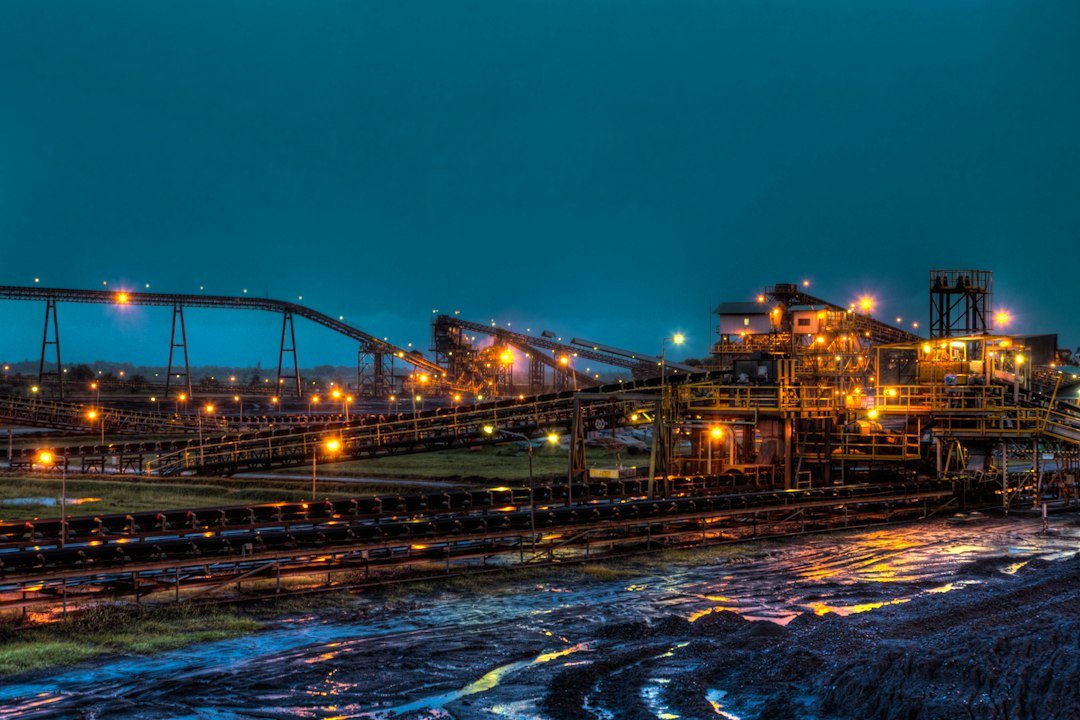
A gold deposit may also contain economically recoverable silver, copper, lead, zinc, or other metals. When those secondary metals are sold, a miner may deduct their revenue from reported gold production costs as a by-product or co-product credit. The result can be a much lower cash cost or all-in sustaining cost (AISC) per ounce—even though the physical cost of mining and processing the ore has not disappeared.
How a by-product credit works
A mine designated primarily as a gold operation may treat revenue from secondary metals as a reduction of the costs attributed to gold. A co-product method may instead allocate costs among metals according to a stated methodology. The World Gold Council’s guidance on non-GAAP metrics says by-product and co-product credits are included as reductions in AISC and all-in costs, while also emphasizing disclosure and reconciliation because company methods and regulatory requirements can differ.
This distinction matters. Two mines with similar mining and processing expenses can report very different gold costs if one receives substantial revenue from copper or silver. A low “net of by-product credits” figure therefore describes an economic relationship, not necessarily a simpler or cheaper operation.
Gross metal value is not the credit
Investors should distinguish contained metal from recovered, payable, and sold metal. Metallurgical recovery determines how much metal reaches concentrate or doré. Smelter terms then determine the payable percentage, while transportation, treatment and refining charges, royalties, price-participation terms, and impurity penalties can reduce net revenue. Timing also matters because provisional concentrate sales may later be adjusted when final assays and market prices are known.
A 2025 SEC-filed Aranzazu Mine technical report, an external example unrelated to GBDS, disclosed separate payable percentages for gold, silver, and copper, together with transportation, treatment, refining, settlement, royalty, and impurity-penalty assumptions. Those details show why investors should not multiply headline grades by spot prices and call the result a usable credit.
Price assumptions can reshape reported margins
By-product credits introduce exposure to more than the gold price. A decline in copper or silver prices can raise net gold costs even if gold output and site spending are unchanged. Conversely, stronger secondary-metal prices can make gold costs appear lower. Recovery performance, concentrate quality, contract terms, exchange rates, and sales volumes can have similar effects.
The 2025 Mount Milligan technical report, another external example, estimated life-of-mine gold AISC on a by-product basis after accounting for copper and silver revenue. Its economic analysis separately disclosed gold, copper, and silver revenue, operating costs, treatment and refining costs, and metal-price assumptions—exactly the supporting information needed to understand the net cost figure.
A simplified hypothetical example
Hypothetical example: assume a mine sells 100,000 ounces of gold, incurs $140 million of operating costs and $20 million of sustaining costs, and earns $50 million of net by-product revenue. A simplified net cost would be $110 million, or $1,100 per gold ounce: ($140 million + $20 million − $50 million) ÷ 100,000 ounces. Before the credit, the same simplified figure would be $1,600 per ounce.
If the net by-product credit fell 30% to $35 million while everything else stayed constant, the simplified cost would rise to $1,250 per ounce. This illustration is not a forecast and omits many items found in formal AISC reconciliations, but it demonstrates the sensitivity clearly.
Questions investors should ask
Useful due-diligence questions include: Which metals are classified as by-products or co-products? Is the cost figure before or after credits? What prices, recoveries, payable percentages, and exchange rates are assumed? Are treatment charges, transport, royalties, penalties, and streaming obligations included? How sensitive are costs and project value to lower secondary-metal prices? Can the reported measure be reconciled to the financial statements?
The takeaway
By-product credits can be economically valuable, but they can also obscure the mine’s gross cost structure and create comparison problems. Investors should examine the metals behind the credit, the deductions between concentrate and cash, and the sensitivity of net gold costs to secondary-metal markets.
This article is for educational purposes only and is not investment, legal, accounting, or technical advice. Mining projects involve geological, metallurgical, financing, operating, commodity-price, environmental, and execution risks. Review primary disclosures and consult qualified advisers before making investment decisions.
Gold Mine Ramp-Up: From First Ore to Nameplate Capacity
A new gold mine does not become a steady-state operation the moment ore enters the plant. Ramp-up is the period when the mine, processing circuit, workforce, power supply, laboratories, maintenance systems, and logistics must begin working together at increasing scale. For investors, understanding the milestones between construction and stable production can help separate genuine operating progress from a headline that may still precede months of optimization.

Four milestones that are not interchangeable
First ore generally means mined material has been introduced into the processing plant. It is an important integration test, but it does not prove that planned throughput, recovery, or operating availability can be sustained.
First gold or an inaugural pour shows that the recovery and refining circuit has produced saleable metal. The initial quantity may be small, may include accumulated material, and may not represent a repeatable production rate.
Commercial production is a company-defined operational and accounting milestone. It can affect how certain revenues and costs are reported, but definitions and thresholds vary. Investors should read the issuer’s stated criteria instead of assuming that “commercial” means full design capacity.
Nameplate capacity is the plant’s stated design rate. Reaching it briefly is different from sustaining it. Steady-state performance normally requires consistent ore feed, throughput, recovery, availability, product quality, and cost control over a meaningful period.
Why ramp-up can be difficult
Bottlenecks may emerge in crushing, grinding, leaching, thickening, filtration, tailings handling, water balance, or power delivery. Instrumentation and control loops may require tuning. Recovery can change when actual ore differs from test samples, while an inconsistent mine schedule can leave the plant short of the right blend. Spare-parts availability, operator training, maintenance planning, and laboratory turnaround times can also constrain progress. These issues may raise unit costs and working-capital needs even when the long-term plan remains intact.
What primary disclosures can reveal
The current SEC mining-property disclosure rule requires a feasibility study supporting mineral-reserve disclosure to address construction, production ramp-up, mining schedules, and project execution plans. That makes the assumed ramp-up curve a legitimate due-diligence subject, not a minor operating detail.
A useful external example—unrelated to GBDS—is B2Gold’s Goose Mine. An SEC-filed 2025 disclosure reported first ore on June 24, an inaugural gold pour on June 30, and continued work to increase throughput toward design capacity. A later SEC filing reported commercial production on October 2, 2025, while also describing mill optimization and costs incurred during construction and ramp-up. The sequence illustrates why milestone dates should be evaluated alongside operating data and remaining capital requirements.
A hypothetical ramp-up example
Hypothetical example: suppose a plant has nameplate throughput of 10,000 tonnes per day. During an early period it averages 70% of that rate and achieves 85% of design recovery. Holding grade and all other factors constant, recovered output would be about 59.5% of the nameplate case: 70% × 85%. If the design case would recover 10,000 ounces over a comparable period, the simplified ramp-up case would recover about 5,950 ounces. Actual results can differ because grade, downtime, ore blend, recoveries, inventory movements, and reconciliation all change.
Questions investors should ask
Investors can compare actual throughput, plant availability, recovery, head grade, and unit costs with the ramp-up plan; identify the current bottleneck and the work needed to remove it; review remaining capital and liquidity; understand how pre-commercial and post-commercial costs are treated; and watch whether steady-state timing or production guidance changes. Mine-to-plant reconciliation and stockpile quality can be as important as the plant’s mechanical performance.
The takeaway
First ore and first gold are meaningful achievements, but neither proves stable economics. A disciplined review follows the full path from commissioning through commercial production to sustained nameplate performance—and tests whether capital, schedule, recovery, and cost assumptions are converging with reality.
This article is for educational purposes only and is not investment, legal, or technical advice. Mining projects involve geological, metallurgical, permitting, financing, operating, commodity-price, environmental, and execution risks. Review primary disclosures and consult qualified advisers before making investment decisions.
Gold Project Capital Contingency: What Investors Should Examine
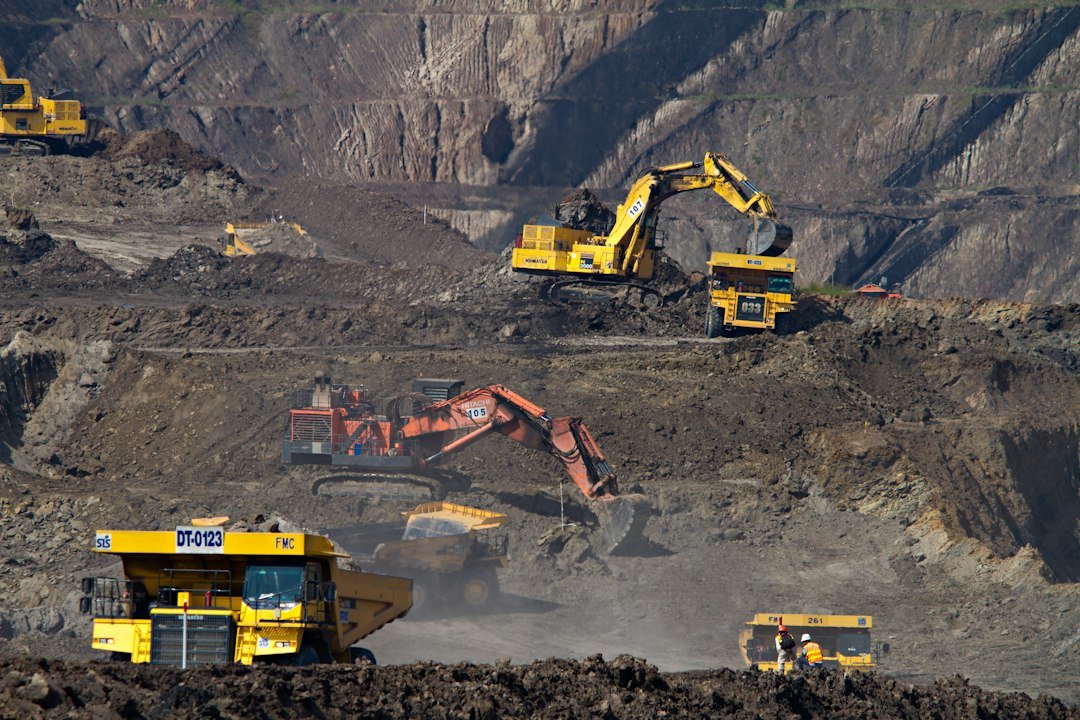
A gold project’s headline capital estimate often includes contingency, but that line should not be mistaken for guaranteed protection against every possible overrun. Contingency is an allowance for uncertainty within a defined estimate and project scope. Its usefulness depends on the maturity of the engineering, the quality of the underlying quantities and prices, and the risks that have—or have not—been included elsewhere.
What Contingency Is Designed to Cover
In a well-structured estimate, contingency generally addresses uncertainty that remains within the defined scope: quantities may change as design advances, productivity may differ from assumptions, or individual equipment and construction packages may cost more or less than expected. A disciplined estimate connects contingency to identified uncertainty rather than adding an unexplained percentage at the end.
Estimate maturity matters. The current SEC mining-disclosure rule in 17 CFR 229.1302 provides study-stage benchmarks. Its table associates an initial assessment with accuracy of approximately plus or minus 50% and contingency of no more than 25%; a pre-feasibility study with approximately plus or minus 25% accuracy and contingency of no more than 15%; and a feasibility study with approximately plus or minus 15% accuracy and contingency of no more than 10%. These are disclosure parameters, not promises that actual construction costs will remain inside the stated range.
What Contingency May Not Cover
Investors should distinguish contingency from escalation, foreign-exchange movement, financing costs, working capital, taxes, owner’s costs, schedule delay, and material scope changes. Whether those items are included varies by estimate. A new tailings design, relocated access road, larger power plant, delayed permit, or changed processing route can create costs outside the original scope rather than simply consuming contingency.
Exclusions deserve as much attention as the percentage. A 10% contingency on an incomplete base estimate may provide less protection than a smaller percentage applied to well-defined quantities, current vendor quotations, realistic labor productivity, and a complete owner’s-cost schedule.
Why Technical-Report Language Matters
A useful current example is the 2025 SEC-filed San Gabriel Project technical report, which identifies further development of capital-cost detail—including owner’s costs and contingency—as recommended work. That wording helps investors recognize when an estimate still requires refinement. It is an external disclosure example and does not imply any affiliation with GBDS.
Hypothetical Capital Example
Assume a hypothetical project has a $200 million base capital estimate and a 15% contingency, producing a stated total of $230 million. If $12 million of escalation and $8 million of owner’s costs were excluded, the broader funding need would be $250 million before financing fees or working capital. The contingency percentage has not changed, but the amount an investor must finance has increased by $20 million. This simplified example is not a GBDS project forecast and does not represent an expected return.
Investor Due-Diligence Questions
Ask which study stage supports the estimate; when quantities and vendor quotes were updated; whether contingency was derived by discipline or through a risk analysis; which currency and inflation dates were used; and whether owner’s costs, construction management, commissioning, spares, first fills, working capital, taxes, and financing fees are included. Compare the estimate’s effective date with current procurement conditions, and review whether high-risk packages have fixed prices, budget quotes, or preliminary allowances.
The Investor Takeaway
Capital contingency is most informative when read together with scope definition, estimate accuracy, exclusions, escalation, schedule risk, and funding requirements. Investors should focus less on whether a percentage looks large and more on whether the underlying estimate is complete, current, traceable, and appropriate for its study stage.
Educational disclaimer: This article is for general information only and is not investment, legal, tax, accounting, or engineering advice. Mining projects involve geological, technical, financing, permitting, environmental, commodity-price, inflation, and execution risks. Conduct independent due diligence and consult qualified professionals before making investment decisions.
Underground Mine Ventilation: Why Airflow Matters to Gold Investors
Ventilation is easy to overlook when reviewing an underground gold project, yet it can influence safety, production capacity, capital spending, and operating costs. A mine needs controlled airflow to deliver fresh air to active workplaces and remove diesel exhaust, blasting fumes, dust, heat, and other contaminants. If the system cannot support the planned fleet and work areas, the mining schedule may be constrained even when ore is available.
What a Ventilation System Does
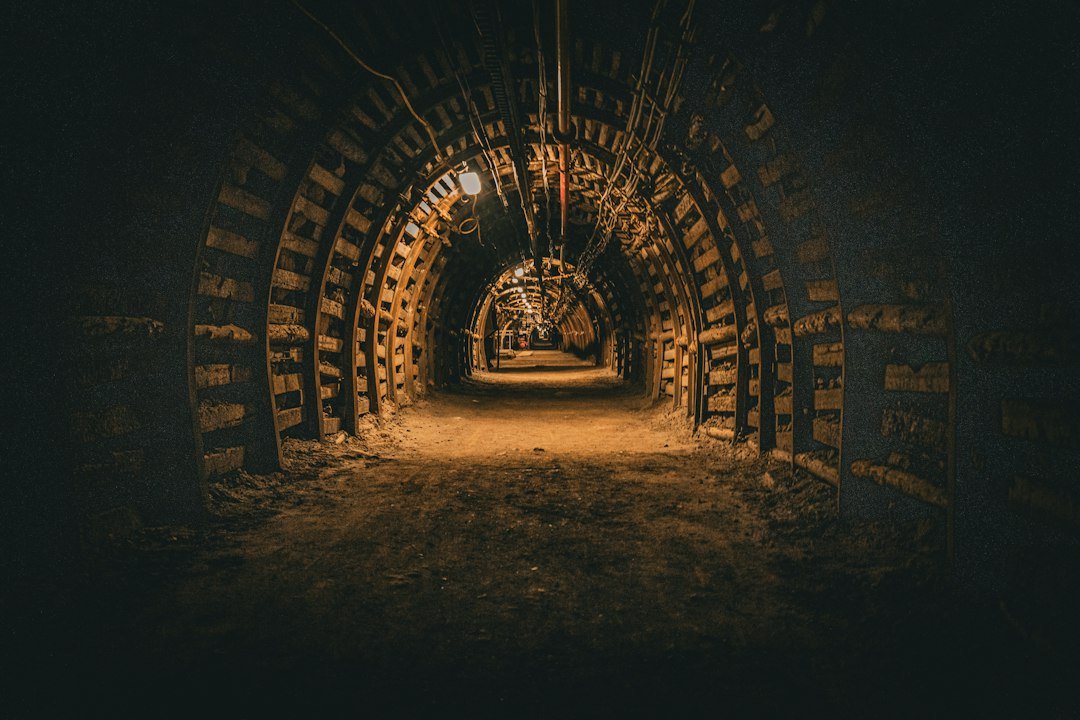
Primary fans move air through major intake and return routes, while raises, shafts, doors, regulators, and stoppings direct it around the mine. Auxiliary fans and ducting carry fresh air to development headings and other workplaces outside the main airflow. Deeper or hotter mines may also require refrigeration or air cooling.
The health purpose is fundamental. NIOSH’s mining guidance, reviewed in January 2025, identifies diesel particulate matter and toxic gases among the respiratory hazards found in mines. The agency emphasizes engineering controls, monitoring, and operating practices that reduce exposure. In the United States, 30 CFR Part 57 contains the federal safety and health standards for underground metal and nonmetal mines, including air-quality and diesel-particulate requirements.
Why Airflow Can Limit Production
Ventilation demand depends on the number and power of diesel units, the location of active headings, contaminants, heat, blasting cycles, leakage, and local rules. Adding trucks or opening new mining areas can therefore require more than equipment purchases: the mine may need larger fans, new return-air raises, electrical upgrades, or additional cooling.
A dated but useful real-world illustration appears in the 2020 SEC-filed Brucejack technical report. Its ventilation design calculated airflow for diesel equipment and fixed facilities, then added an allowance for leakage and balancing. The example shows why investors should assess the complete network rather than a single fan rating. It does not imply any affiliation with GBDS.
Costs, Redundancy, and Mine Depth
Ventilation creates both capital and operating demands. Shafts, raises, fans, substations, ducting, controls, and refrigeration can require substantial development. Electricity and maintenance continue throughout the mine life. As workings deepen or extend, airway resistance, heat, and travel distance can increase, potentially requiring staged expansions that should appear in the life-of-mine plan.
Investors should also examine redundancy. A design that depends on one critical fan, power feed, or return airway may be vulnerable to unplanned outages. Spare capacity, backup power, condition monitoring, access for maintenance, and alternative airflow paths can improve resilience, but they also add cost.
Hypothetical Capacity Example
Assume a hypothetical mine requires 360 cubic metres per second of airflow for its scheduled equipment and workplaces. The installed system is expected to deliver 400 cubic metres per second. If an outage or network restriction reduces effective airflow by 15%, available flow falls to 340 cubic metres per second—20 below the requirement. Management may have to reduce diesel activity, close a work area temporarily, or change the schedule. This simplified example is not a project forecast and does not account for site-specific regulation or engineering.
Investor Due-Diligence Questions
Ask whether airflow calculations match the actual fleet and development schedule; whether heat, blasting fumes, dust, and diesel emissions are modeled by area; how leakage and future depth are treated; which components are single points of failure; and whether fan, raise, cooling, and power expansions are included in capital estimates. Review actual airflow, contaminant monitoring, energy use, fan availability, and production interruptions against plan.
The Investor Takeaway
Ventilation is not merely a compliance item. It is operating infrastructure that can determine how many headings and machines a mine can use safely at one time. A credible plan connects ventilation capacity, mine depth, fleet choices, monitoring, redundancy, capital timing, and the production schedule.
Educational disclaimer: This article is for general information only and is not investment, legal, tax, safety, or engineering advice. Mining projects involve geological, operational, financing, permitting, environmental, commodity-price, and execution risks. Conduct independent due diligence and consult qualified professionals before making investment decisions.
Refractory Gold Ore: Why Processing Complexity Matters to Investors
Gold grade is only part of a deposit’s economic story. Some ores are “refractory,” meaning conventional cyanide leaching cannot recover enough of the contained gold without additional treatment. For investors, that distinction matters because the required process route can affect capital intensity, operating costs, ramp-up risk, environmental controls, and the reliability of projected recoveries.

What Makes Gold Ore Refractory?
In many refractory ores, microscopic or submicroscopic gold is enclosed within sulfide minerals such as pyrite or arsenopyrite. In other cases, naturally occurring carbonaceous material can adsorb dissolved gold during leaching, a behavior called preg-robbing. The U.S. Environmental Protection Agency’s technical literature notes that sulfide-hosted gold may require the host mineral to be broken down before cyanide recovery can work effectively.
Metallurgical testwork must therefore identify not only how much gold is present, but where it occurs, how mineralogy varies across the deposit, and which combination of grinding, concentration, oxidation, and leaching delivers a practical recovery.
The Main Pretreatment Routes
Pressure oxidation uses oxygen, heat, and pressure inside autoclaves to oxidize sulfide minerals before cyanidation. It can produce strong recoveries, but the plant is technically demanding and depends on reliable oxygen supply, materials that resist corrosion, skilled operators, and disciplined maintenance.
Roasting oxidizes sulfides at high temperature. It is established technology, but fuel use, gas handling, and emissions controls can materially shape the project’s cost and permitting profile. Bio-oxidation uses microorganisms to break down sulfides. It may reduce some energy requirements, although residence time, temperature, chemistry, and biological performance must be controlled. Flotation and ultrafine grinding may also be used to concentrate sulfides or expose more gold before treatment.
Why Processing Complexity Changes the Economics
A complex flowsheet introduces more equipment, interfaces, consumables, and potential bottlenecks. Investors should examine sulfur and carbon variability, oxygen and reagent demand, water balance, neutralization requirements, residue management, maintenance shutdowns, and the availability assumptions used in the economic model.
A current real-world example is the 2026 SEC-filed technical report for the Pueblo Viejo operation. It describes pressure oxidation in four parallel autoclaves and a flotation circuit added to upgrade lower-grade refractory feed. This example illustrates how mineralogy, blending, and plant configuration interact; it does not imply any relationship with GBDS.
Hypothetical Recovery Example
Consider a hypothetical one million tonnes of ore grading 4 grams of gold per tonne. It contains about 128,600 ounces before processing. At 90% recovery, recovered metal would be approximately 115,700 ounces; at 65% recovery, it would be about 83,600 ounces—a difference of roughly 32,100 ounces. This simplified illustration excludes payable-metal terms, refining deductions, operating costs, taxes, and time value. It shows why a recovery assumption must be supported by representative testing rather than grade alone.
Questions Investors Should Ask
Useful due-diligence questions include: Does testwork represent every major ore domain? Were recovery, reagent consumption, and residue characteristics tested at an appropriate scale? How sensitive is performance to sulfur, arsenic, carbon, hardness, and grind size? What are the assumed autoclave or oxidation-plant availability and maintenance schedules? Are oxygen supply, water treatment, emissions control, tailings management, and ramp-up contingencies fully reflected in the cost estimate?
The Investor Takeaway
Refractory ore is not automatically uneconomic, and many successful mines process it. The key is whether the selected flowsheet is supported by representative mineralogy and metallurgical data, realistic capital and operating assumptions, appropriate environmental controls, and an experienced operating plan. Investors should treat recovery as an engineered outcome with uncertainty—not as a fixed property of the deposit.
Educational disclaimer: This article is for general information only and is not investment, legal, tax, or technical advice. Mining projects involve geological, metallurgical, financing, permitting, environmental, commodity-price, and execution risks. Conduct independent due diligence and consult qualified professionals before making investment decisions.
Gold Mining Royalties and Production Taxes: Why Higher Prices Can Raise Costs
A rising gold price can improve a mine’s revenue and operating margin, but not every additional dollar flows to the producer. Royalties, production taxes, profit-sharing arrangements, and other fiscal charges may increase as metal prices or revenue rise. Investors who treat mining costs as fixed can therefore overstate the benefit of a stronger gold market.

How mining royalties differ from income tax
A royalty is generally a charge connected directly to mineral extraction or production. An ad valorem royalty may be calculated as a percentage of gross mineral value or revenue, while a net-smelter-return royalty may allow specified deductions such as refining or transportation. Some jurisdictions use sliding rates tied to gold prices, and others apply profit-based or rent-based instruments.
Corporate income tax, by contrast, is normally assessed on taxable profit after allowable deductions. The International Monetary Fund’s fiscal analysis framework notes that mining tax-and-royalty regimes commonly combine production royalties, corporate income tax, and sometimes additional rent, profit, or windfall taxes. The exact mix affects both the timing and risk of government revenue and the mine’s after-tax cash flow.
Why gold-price sensitivity matters
A gross-revenue royalty rises with the value of production even if operating costs also increase. Sliding-scale royalties can rise faster when the gold price crosses specified thresholds. Profit-based charges may respond more to margin than revenue, but their definitions, deductions, loss carryforwards, and payment timing can be complex.
Current company guidance makes the sensitivity visible. In its February 2026 outlook, Newmont estimated an additional royalty, production-tax, and worker-participation impact of about $6 per ounce for each $100-per-ounce change in the gold price. Barrick’s second-quarter 2026 results also identified higher royalties associated with a stronger realized gold price as one factor affecting cost of sales. These are company-specific disclosures, not universal formulas.
A simplified hypothetical example
Hypothetical example only: assume a mine sells 100,000 ounces at $3,000 per ounce and pays a 5% royalty on gross revenue. Revenue is $300 million and the royalty is $15 million, or $150 per ounce. If the gold price rises to $3,500 with production unchanged, revenue becomes $350 million and the royalty becomes $17.5 million, or $175 per ounce. The mine receives more revenue, but $2.5 million of the price benefit flows through the royalty.
The calculation becomes more complicated when rates change by price bracket, deductions vary, or the operation also owes production taxes, profit sharing, withholding tax, import duties, or corporate income tax. Investors should avoid applying one jurisdiction’s fiscal terms to another mine—or assuming that the headline royalty rate captures the full government take.
What investors should investigate
Useful questions include: Is the royalty based on revenue, net smelter return, profit, or production volume? Does the rate escalate with gold prices? Are there private royalties in addition to government charges? Which deductions are permitted? Are fiscal-stability agreements in place, and when do they expire? Does management’s cost guidance disclose gold-price assumptions and royalty sensitivity?
The World Gold Council’s non-GAAP guidance places royalties and production taxes within the broader AISC framework, but investors should still reconcile AISC with tax expense, cash taxes, and jurisdiction-level disclosures. AISC is not the same as after-tax free cash flow.
The investor takeaway
Higher gold prices are usually favorable for producers, yet fiscal mechanisms determine how the upside is shared. The clearest analysis models royalties and production taxes as price-sensitive items, checks jurisdiction-specific terms, and measures the resulting effect on after-tax cash flow rather than relying only on revenue growth.
This article is for educational purposes only and is not investment, tax, or legal advice, nor an offer to buy or sell any security. Mining investments involve commodity-price, geological, operational, financing, regulatory, environmental, fiscal, and political risks. Conduct independent due diligence and consult qualified advisers.