
Gold Mine Equipment Availability: Why Downtime Matters to Investors
A mine plan may specify tonnes moved, ore delivered and gold produced, but those targets depend on trucks, shovels, loaders, crushers and support equipment being ready when required. Equipment downtime can reduce material movement, interrupt plant feed and increase repair or contractor costs. For investors, availability is therefore more than a maintenance statistic: it is one link between the technical plan and the financial model.
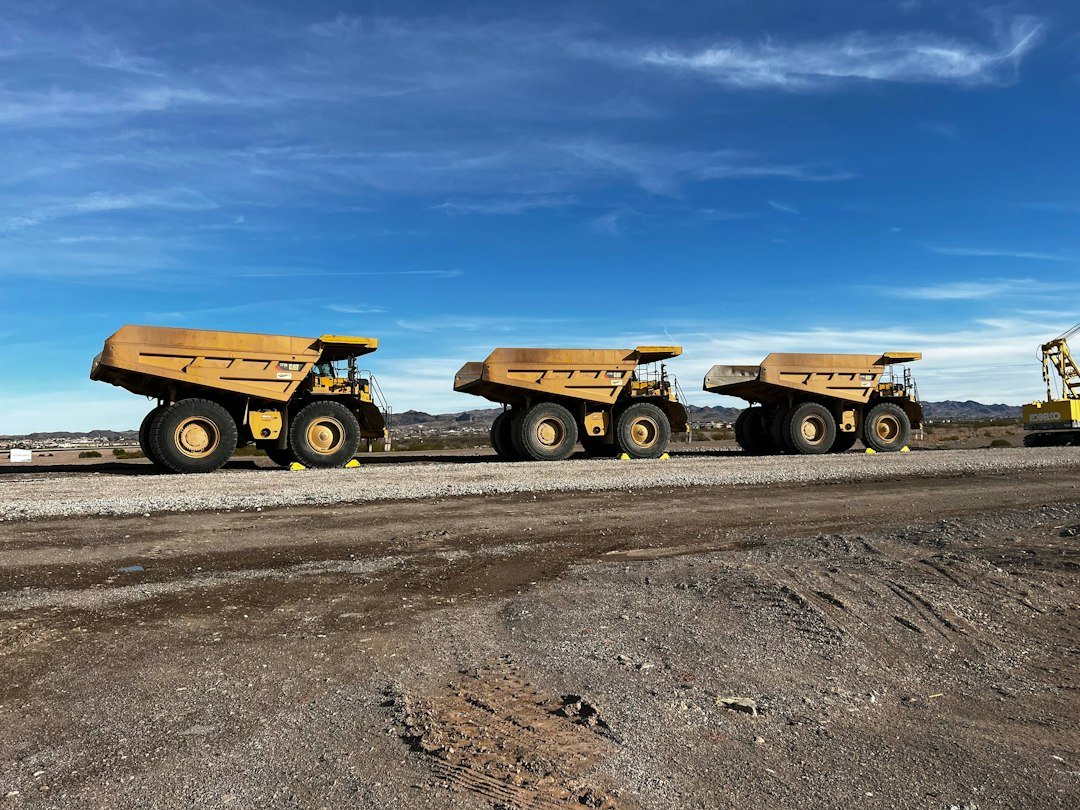
Evergreen investor education. This article does not describe GBDS equipment, production, costs, maintenance practices, project economics or forecasts.
Availability and utilization are different
Equipment availability commonly describes the share of scheduled time that a machine is ready for service. Utilization asks how much of that available time the machine is actually used. Definitions can vary by operator, which makes the calculation method and reporting period important.
A truck can be mechanically available but idle because there is no operator, shovel, dispatch assignment or safe haul route. Conversely, pushing utilization too hard without enough planned maintenance can create a larger backlog and more unplanned failures later. Investors should examine both measures together rather than treating one percentage as a complete picture.
Downtime can propagate through the mine plan
In an open pit, fewer available trucks may limit ore and waste movement. Delayed waste stripping can restrict future access to ore even if current production appears intact. Shovel downtime can leave trucks waiting, while crusher or conveyor downtime may force stockpiling or reduce mill feed. Pumps, graders, water trucks and service vehicles can also become bottlenecks despite not directly producing ore.
A 2022 SEC-filed technical report for the DeLamar gold-silver project illustrates how studies incorporate availability into design. It used different availability assumptions for crushing and processing stages and cautioned that operating definitions may differ. The report concerns another company and property; it is cited only as a disclosure example.
Maintenance quality affects more than production
Useful operating indicators include planned versus unplanned downtime, maintenance backlog, component life, mean time between failures, repair duration, critical-spares coverage and actual performance versus plan. Fleet age, rebuild timing, technician capacity and parts lead times provide context for those numbers.
Maintenance also has a safety dimension. A NIOSH haul-truck research roadmap found maintenance was an issue in more than one-third of the haul-truck-related fatal accidents it studied. The Mine Safety and Health Administration’s surface mobile-equipment program template also treats maintenance work as part of a broader risk-management program. Production pressure should never substitute for safe inspection, repair and removal from service when required.
A hypothetical availability example
Hypothetical example: assume a fleet is sized to move 600,000 tonnes in a 30-day month at 90% availability. If availability averages 80% and there is no spare capacity, a simple proportional estimate gives about 533,000 tonnes—roughly 67,000 tonnes below plan. This is a deliberately simplified illustration, not a forecast. Actual performance also depends on utilization, cycle times, haul distance, operator coverage, road conditions, equipment mix and whether another unit can absorb the work.
Questions investors can ask
Investors can ask: What availability and utilization assumptions support the mine schedule? How have actual results compared with plan? Which units are single points of failure? Is the fleet owned or contractor-operated? Are major rebuilds included in capital forecasts? How large is the maintenance backlog, and are critical spares and skilled technicians available? Does sensitivity analysis show what lower availability could do to tonnes, timing and unit costs?
Strong disclosure connects equipment metrics with production, capital and risk. A high headline availability rate is useful only when its definition is clear and the rest of the operating system can convert available hours into safe, productive work.
Educational disclaimer: This material is for general information only and is not investment, legal, tax or engineering advice. Mining projects involve geological, operational, commodity-price, financing, environmental, regulatory and execution risks. Review current technical disclosures and consult qualified advisers before making investment decisions.