
Battery-Electric Equipment in Underground Gold Mines: What Investors Should Evaluate
Battery-electric vehicles are moving from mining trials into selected underground fleets, but electrification is not simply a diesel-equipment replacement. For gold investors, the important question is whether the mine has designed the power supply, charging strategy, ventilation system, maintenance practices, and production schedule as one operating system.
Why underground mines consider battery power
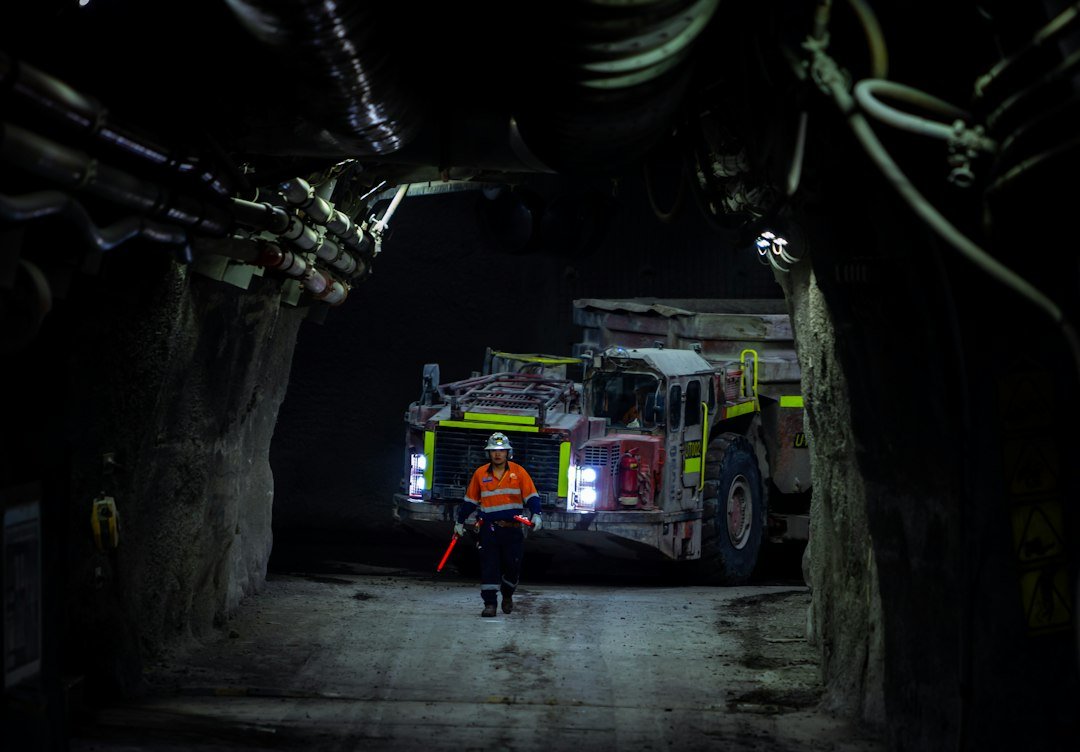
Diesel engines add heat and airborne contaminants underground. The National Institute for Occupational Safety and Health identifies diesel engines as a major source of fine aerosols and gases in underground mines and emphasizes that exposure control requires coordinated ventilation, maintenance, equipment, and operating practices. In a July 10, 2025 bulletin, NIOSH also noted that advanced battery-powered equipment can reduce reliance on diesel, improve air quality, and lower fuel consumption and ventilation costs.
Those potential benefits can be valuable as a mine deepens and ventilation distances grow. Less diesel heat and exhaust may reduce some ventilation demand, while electric drivetrains can offer strong low-speed torque and regenerative braking. However, a mine should demonstrate these advantages with measured energy use, productivity, maintenance, and air-quality data—not assumptions alone.
Charging and duty cycles can determine production
Equipment must be available when headings, stopes, and haulage routes require it. Investors should examine battery capacity, charging time, charger locations, electrical demand, shift length, travel gradients, payload, temperature, queueing, and whether batteries are swapped or charged on the vehicle. A technical report filed with the SEC for the external CSA underground mine described a battery-electric loader trial with six to seven hours of productivity followed by two to three hours of charging. That result is site- and equipment-specific, but it shows why nameplate battery range is not enough.
Adoption is continuing at operating gold assets. Eldorado Gold’s first-quarter 2026 SEC filing says its growth capital includes additional battery-electric vehicles for the Triangle mine. Investors should still distinguish a fleet purchase from verified improvements in tonnes moved, development metres, ventilation energy, cost per tonne, or equipment availability.
Battery safety changes the risk profile
Eliminating diesel exhaust does not eliminate mobile-equipment risk. High-energy batteries introduce charging, isolation, collision, damaged-cell, thermal-runaway, fire-detection, emergency-response, and end-of-life requirements. In a 2025 decision concerning lithium-ion equipment, the Mine Safety and Health Administration highlighted overcharging and battery deterioration as conditions that can contribute to ignition or thermal runaway. Investors should look for underground-specific standards, trained responders, protected charging bays, monitoring, quarantine procedures, and replacement criteria.
A hypothetical charging-delay example
Hypothetical example only: Assume one loader is scheduled for 20 productive hours per day at 120 tonnes per hour. If charging causes two unplanned hours of lost availability, daily movement falls by 240 tonnes. Over 350 operating days, that equals 84,000 tonnes. At a hypothetical grade of 4 grams per tonne and 90% recovery, the delayed material contains about 9,700 recoverable ounces. This does not mean the ounces are lost permanently, and the example ignores stockpiles, spare units, prices, costs, dilution, and time value. It shows why charging must be integrated into the mine schedule.
What investors should ask
Review the fleet transition plan, charger and substation capital, grid or on-site generation capacity, redundancy, ventilation-model changes, battery warranties, replacement costs, spare-parts support, fire controls, operator training, and performance guarantees. Compare actual availability, utilization, tonnes per operating hour, energy per tonne, maintenance cost, and ventilation energy against the diesel baseline. Also ask whether the financial model includes battery replacement and whether production can continue during charger or power outages.
The takeaway
Battery-electric equipment can support cleaner air and lower diesel dependence underground, but value depends on execution. A credible investment case connects equipment performance with charging, ventilation, mine design, safety, power reliability, and life-cycle cost. Electrification should be judged by verified operating outcomes rather than the technology label.
This article is for educational purposes only and is not investment, legal, tax, safety, or technical advice. Mining projects involve geological, operational, metallurgical, environmental, permitting, financing, commodity-price, and execution risks. Review qualified technical disclosures and seek appropriate professional advice before making investment decisions.