
Acid Rock Drainage in Gold Mining: What Investors Should Evaluate
Acid rock drainage can become a long-duration environmental and financial liability when mining exposes sulfide-bearing rock to air and water. The resulting reactions may generate acidity and mobilize metals from waste rock, tailings, pit walls, underground workings, or spent ore. Not every gold project has material acid-generation risk, but investors should examine the evidence because impacts can continue long after production ends.
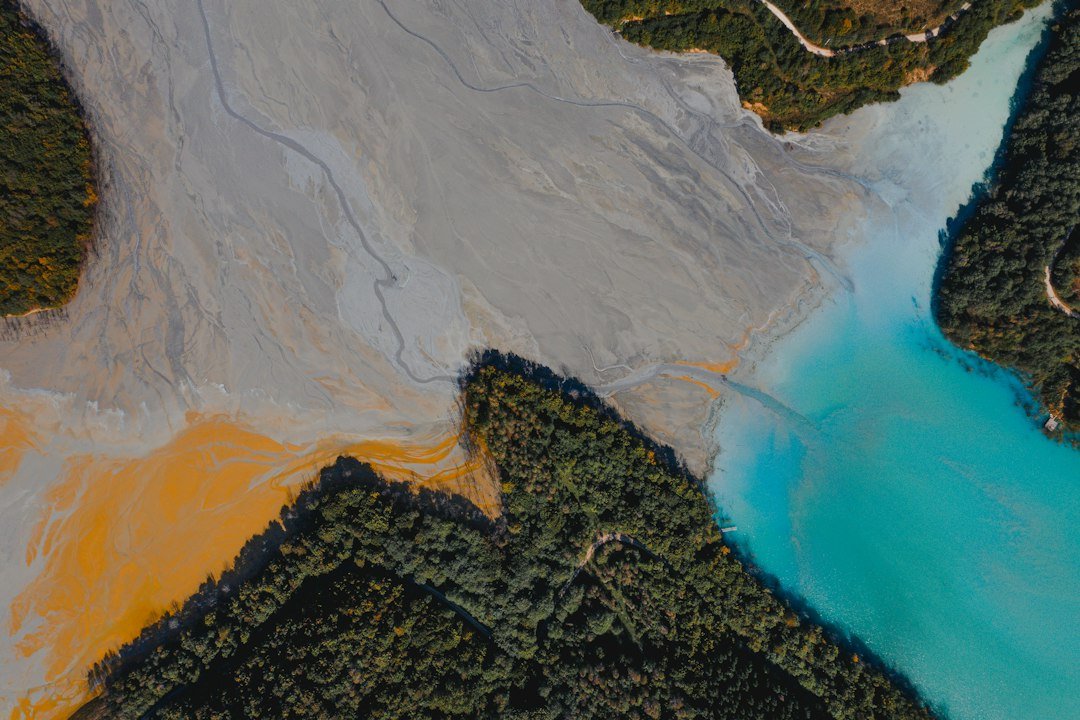
How acid drainage develops
The U.S. Geological Survey explains that mine drainage can form when water contacts rocks containing sulfur-bearing minerals, producing sulfuric acid and dissolved iron; acidity can then increase the mobility of other metals. The updated September 2, 2026 USGS mining-and-water-quality overview also notes potential effects on drinking water, aquatic life, and infrastructure. However, drainage can be metal-rich without being strongly acidic, so pH alone is not a complete risk screen.
Prediction requires representative testing
Static tests estimate acid potential and neutralization capacity. Kinetic tests observe weathering and leaching over time. Mineralogy, sulfur form, particle size, climate, water balance, and placement method also matter. The EPA Hardrock Mining Framework identifies waste rock, tailings, spent leach ore, pit walls, and underground workings as possible sources. Investors should ask whether samples represent each material type, depth, alteration zone, and planned mining phase—not merely whether “testing was completed.”
Prevention can be more durable than treatment
Controls may include segregating potentially acid-generating material, blending it with neutralizing rock, limiting oxygen or water entry, diverting clean runoff, collecting contact water, engineered covers, lined facilities, submerged disposal where appropriate, and progressive reclamation. Environment and Climate Change Canada’s metal-mining code of practice emphasizes site-specific prediction, early planning, segregation, covers, water diversion, and minimizing post-closure collection and treatment.
The time lag can extend beyond mine life
Dated external example: A January 22, 2026 SEC-filed technical report for Donlin Gold describes seven waste-rock management categories based partly on acid-generation potential. Its potentially acid-generating categories include modeled onset periods ranging from less than a few years to several decades, and it separately recognizes arsenic-leaching potential. The details are project-specific, but they show why a mine-life forecast may not capture the full environmental timeline.
A simplified treatment-cost example
Hypothetical example only: Assume a site must collect and treat 20 million cubic metres of water annually at $0.40 per cubic metre, or $8 million per year. At a 5% discount rate, a level 25-year treatment stream has a simplified present value of about $113 million. Extending the same annual cost to 100 years raises the present value to about $159 million. This example excludes treatment-plant capital, inflation, changing flows, monitoring, sludge disposal, taxes, failures, and financial-assurance rules.
Investor due-diligence questions
Review the number and location of geochemical samples, static and kinetic test duration, material classifications, waste volumes, block-model integration, segregation procedures, cover trials, water balance, contact-water capacity, treatment assumptions, monitoring triggers, closure duration, and contingency plans. Compare technical designs with the closure estimate and financial assurance. Ask whether climate extremes, pit-lake chemistry, neutral metal leaching, and treatment interruption have been stress-tested.
The takeaway
Acid rock drainage is best evaluated as a source-pathway-receptor and life-cycle problem. Strong projects characterize materials early, prevent exposure where practical, verify field performance, maintain contingency, and fund realistic long-term obligations. A low initial pH risk statement is not a substitute for representative testing and a fully costed management plan.
This article is for educational purposes only and is not investment, legal, environmental, geochemical, or technical advice. Mining projects involve geological, operational, water-quality, regulatory, financing, commodity-price, closure, and execution risks. Review current project disclosures and seek qualified professional advice before making investment decisions.