
Drill-and-Blast Performance in Gold Mining: What Investors Should Evaluate
Drilling and blasting can look like a narrow mining activity, but blast quality affects the entire production chain. Fragment size influences excavator productivity, truck loading, crusher throughput, energy consumption, wall stability, dilution, ore loss, and safety. Investors should therefore examine drill-and-blast performance as a system rather than focusing only on explosives cost per tonne.
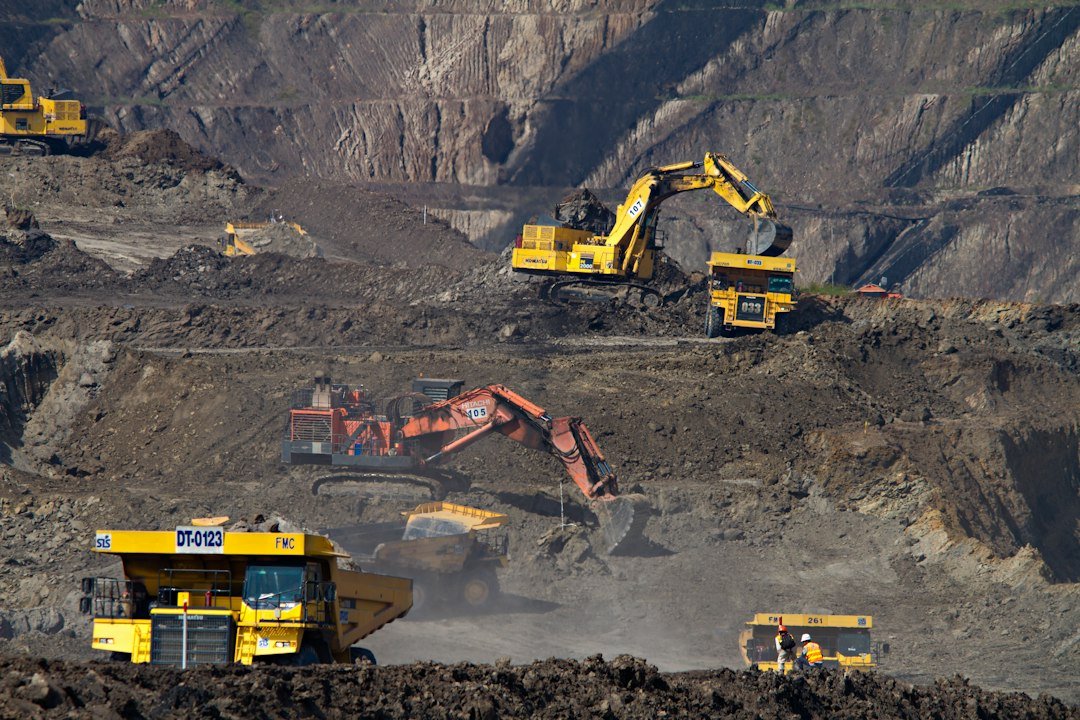
Blast design begins with rock conditions
Bench height, hole diameter, burden, spacing, subdrill, stemming, explosive type, charge distribution, and initiation timing must match the geology and mine plan. Weathering, joints, faults, groundwater, and hardness can change results across the same pit. A pattern that works in waste may be unsuitable near ore contacts, final walls, underground openings, infrastructure, or neighboring communities.
Fragmentation transfers cost downstream
Poor fragmentation can create oversized rock, slower digging, secondary breakage, crusher interruptions, and higher comminution energy. Excessive breakage or movement can increase fines, dilution, ore loss, wall damage, or floor-control problems. The lowest explosives cost is therefore not necessarily the lowest total mining-and-processing cost. Useful performance measures include drill accuracy, powder factor, blast movement, oversize frequency, digging rate, crusher throughput, vibration, backbreak, and reconciliation against planned ore boundaries.
Safety and environmental controls are central
Blasting hazards include flyrock, misfires, premature initiation, ground vibration, airblast, dust, and toxic fumes. The NIOSH mining explosives guidance explains that improper detonation can produce nitrogen oxides and carbon monoxide, while workers can be injured by flyrock or by entering a blast area too early. The U.S. Office of Surface Mining’s blasting overview is coal-focused, but its hazard categories—flyrock, vibration, airblast, fumes, and dust—remain useful questions for evaluating surface-mine controls.
Underground damage can create hidden costs
In underground mines, overbreak and blast-induced damage can weaken excavation boundaries and increase scaling, rehabilitation, ground-support, dilution, and cycle time. A NIOSH study of underground metal mines links blast damage with ground-control and safety implications. Investors should ask whether development profiles, overbreak, support consumption, and re-entry times are measured—not merely whether rounds are completed on schedule.
A current project-specific example
Dated external example: A March 30, 2026 SEC-filed technical report for the Borborema Gold Project describes different bench heights, burden-and-spacing assumptions, hole lengths, and powder factors for ore and waste. It also states that open-pit blasting in Brazil is generally performed by a contractor responsible for explosives management and operational paperwork. These details illustrate the planning required; they are not universal standards or GBDS project facts.
A simplified hypothetical trade-off
Hypothetical example only: Assume a mine moves 10 million tonnes annually. A revised blast design adds $0.08 per tonne in drilling, explosives, and monitoring, increasing annual cost by $800,000. If improved fragmentation reduces loading, secondary breaking, and crushing costs by $0.25 per tonne, gross downstream savings equal $2.5 million, leaving a simplified net benefit of $1.7 million. The result could reverse if dilution, vibration, wall damage, misfires, or production delays increase; site trials and reconciliation are essential.
Investor due-diligence questions
Review contractor responsibilities, explosive storage and transport, drill accuracy, blast exclusions, misfire procedures, vibration monitoring, community complaints, fumes, flyrock controls, wall damage, overbreak, oversize, crusher delays, and secondary breakage. Ask how blast movement is incorporated into grade control and whether continuous improvement uses measured results rather than assumptions. Compare cost per tonne with total mine-to-mill performance.
The takeaway
Effective blasting is controlled energy: enough to produce safe, diggable, processable rock without creating unacceptable movement, damage, or exposure. Strong operations optimize the full production chain and document safety performance, not simply explosives consumption.
This article is for educational purposes only and is not investment, legal, safety, environmental, or technical advice. Mining projects involve geological, operational, environmental, regulatory, financing, commodity-price, and execution risks. Consult qualified professionals and current project disclosures before making investment decisions.