
Owner Mining vs. Contract Mining in Gold Projects: What Investors Should Compare
Who operates the mining fleet can materially affect a gold project’s capital needs, unit costs, production reliability, workforce strategy, and risk allocation. Owner mining gives the company direct control over people and equipment. Contract mining transfers defined activities to a specialist for an agreed commercial structure. Neither model is automatically cheaper or safer.
What owner mining requires
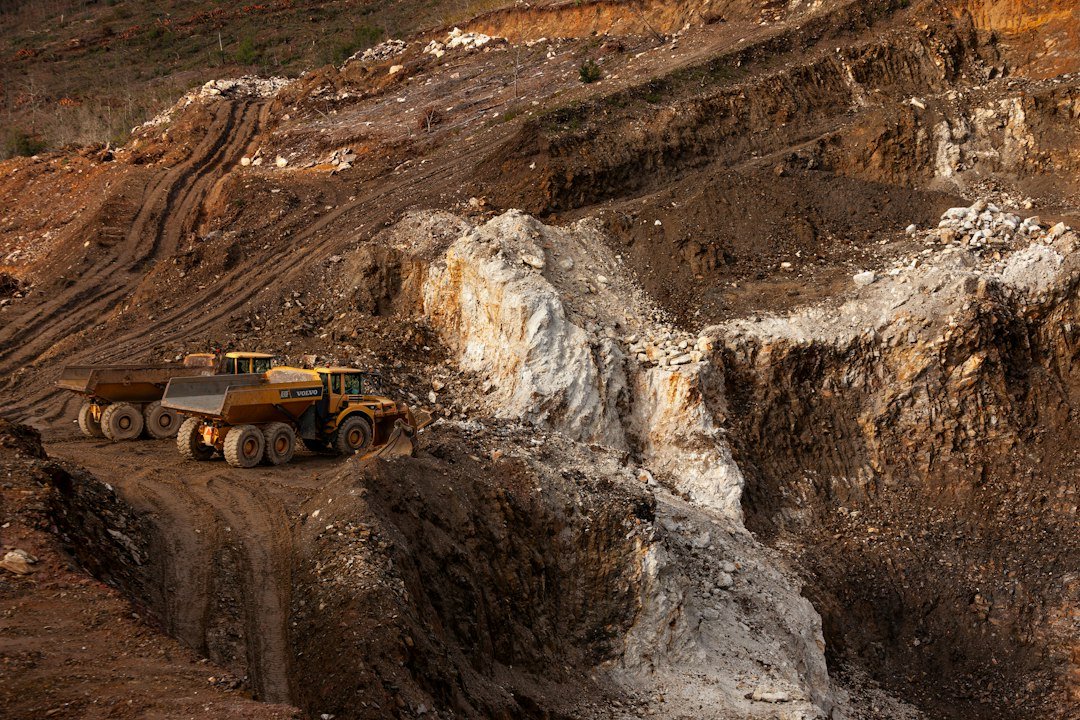
Under owner mining, the project company buys or leases the primary fleet, hires the workforce, manages maintenance, and controls daily execution. That can improve alignment between the life-of-mine plan and operating decisions, but it normally requires more pre-production capital, management depth, maintenance systems, spare parts, training, and working capital.
AngloGold Ashanti’s Arthur Gold Project technical report dated March 26, 2026 provides an external example. Its proposed Nevada operation uses an owner-operated fleet, and its mining costs were developed from first-principles estimates, vendor quotations, staffing plans, and labor assumptions. The example shows the level of planning needed; it does not establish that owner mining is best for another project.
What contract mining can provide
A contractor may mobilize equipment, operators, maintenance capability, and local experience without requiring the mine owner to purchase an entire fleet at the start. This can reduce initial capital and add flexibility for short mine lives, variable workloads, specialized work, or early-stage operations. Pricing may be based on tonnes, metres, hours, activities, or combinations with escalation and performance clauses.
The tradeoff is dependence on contract execution. Gold Fields’ 2026 Tarkwa technical report states that its contractor-mining costs are driven by approved contract rates and factors such as volume and pit depth. It also identifies equipment availability, utilization, disputes, litigation, regulation, and labor as contractor-related risks. Those disclosures are project-specific, but the risk categories are useful due-diligence prompts.
Hybrid models can change over time
Some mines combine the two approaches. A contractor may handle bulk mining while the owner manages technical services, grade control, or selected earthworks. The mix can also change as production stabilizes. A 2026 Buckreef Gold filing describes an owner-operated fleet supplementing a contract fleet for waste mining, rehandling, topsoil removal, and infrastructure work. Investors should compare like-for-like scopes before accepting claims that one fleet has a lower cost per tonne.
Safety responsibility is not outsourced
Using a contractor does not remove the mine owner’s oversight obligations. The Mine Safety and Health Administration explains that independent contractors must meet applicable safety, reporting, and training requirements, while mine operators remain responsible for ensuring appropriate training, including site-specific hazard instruction. Investors should examine contractor prequalification, incident reporting, supervision, change management, and whether incentives reward safe production rather than tonnes alone.
A hypothetical cost comparison
Hypothetical example only: Assume a mine moves 25 million tonnes per year. A contractor rate of $4.00 per tonne would equal $100 million annually. An owner-operated cash cost of $2.80 per tonne would equal $70 million, apparently saving $30 million. If the owner fleet requires $120 million upfront plus $10 million per year of additional fixed and sustaining costs, the net annual difference falls to $20 million, implying a six-year simple payback before financing, taxes, ramp-up losses, residual fleet value, or cost escalation. A short mine life could make the contractor model more attractive despite the higher unit rate.
Investor due-diligence questions
Review the exact scope behind every unit cost, fleet ownership, mobilization timing, fuel and tire responsibility, escalation formulas, minimum-volume commitments, performance guarantees, termination rights, equipment replacement plans, labor availability, and transition costs. Compare availability, utilization, productivity, dilution, ore loss, safety performance, and total cash flow—not just headline dollars per tonne.
The takeaway
Owner mining can create control and long-term cost advantages when scale, mine life, capital, and management capability support it. Contract mining can preserve capital and add flexibility, but introduces counterparty and execution exposure. The stronger model is the one supported by realistic fleet, workforce, contract, and life-of-mine assumptions.
This article is for educational purposes only and is not investment, legal, tax, safety, or technical advice. Mining projects involve geological, operational, environmental, permitting, financing, commodity-price, labor, and execution risks. Review qualified technical disclosures and seek appropriate professional advice before making investment decisions.