
Heap Leach vs. Milling in Gold Projects: What Investors Should Compare
A gold project’s processing route can reshape its capital needs, operating costs, recovery profile, cash-flow timing, water balance, and closure obligations. Heap leaching and conventional milling are therefore not interchangeable labels—or a simple choice between “cheap” and “high recovery.” The right route depends on how the ore actually behaves.
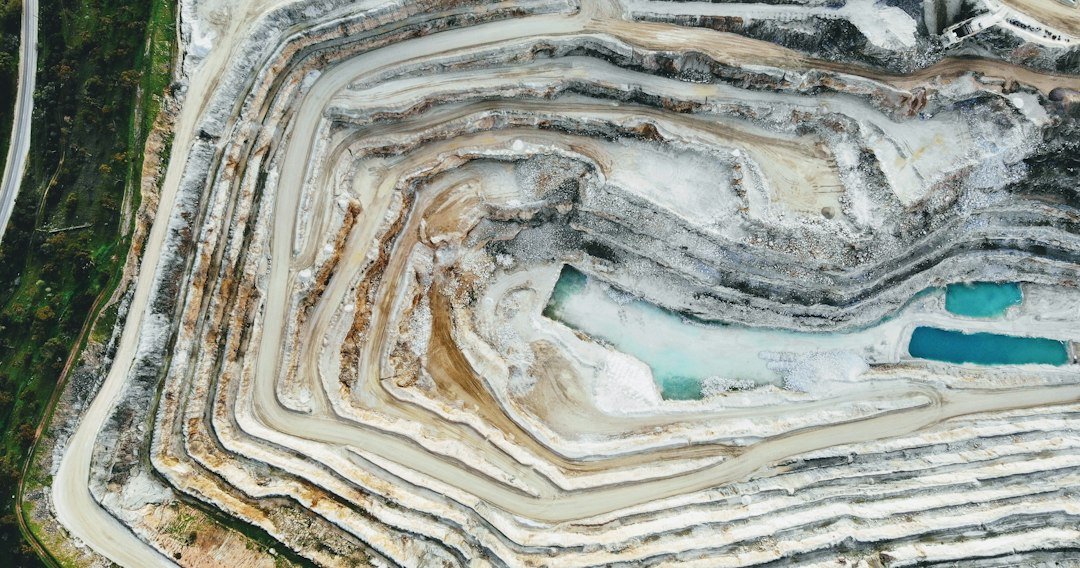
How heap leaching works
Run-of-mine or crushed ore is stacked on engineered, lined pads and irrigated with an alkaline cyanide solution. Gold-bearing solution is collected below the pad and sent to a recovery circuit. The U.S. Environmental Protection Agency’s technical overview explains the core heap-leach, carbon-in-pulp, and carbon-in-leach routes used in gold extraction.
Heap leaching can reduce grinding and plant complexity, especially for permeable oxide ore with favorable leach kinetics. Its tradeoffs may include slower recovery, sensitivity to clay and fines, solution inventories, pad and pond capacity, and a long residual-leach period. For example, Integra Resources’ June 25, 2026 SEC filing describes an external Florida Canyon plan with eight years of active mining followed by about two years of residual heap-leach recovery. That schedule is project-specific, but it illustrates why recovery timing matters.
How milling differs
A mill crushes and grinds ore more finely before treating a slurry in tanks, often using gravity recovery, carbon-in-leach, carbon-in-pulp, flotation, oxidation, or a combination. Milling can deliver faster kinetics or higher recovery for suitable ore, but it normally adds equipment, power demand, maintenance, process-water management, and tailings infrastructure.
Recovery percentages must come from representative testwork, not industry averages. A current New Found Gold SEC filing, for instance, reports project-specific projections of 92% recovery for a gravity-CIL circuit and 88% for gravity-flotation. Those estimates belong to that project and should not be transferred to another orebody.
The ore should drive the flowsheet
Investors should examine oxidation state, gold liberation, sulfide content, permeability, preg-robbing behavior, clay content, crush size, agglomeration needs, reagent consumption, and recovery curves. Hycroft Mining’s 2025 Form 10-K filed in 2026 provides a useful external example: its study routes oxide and some transition material to heap leaching while assigning sulfide and some transition mineralization to milling and pressure oxidation. The lesson is not that this design applies elsewhere, but that different material within one deposit may justify different routes.
A hypothetical recovery comparison
Hypothetical example only: Suppose 10 million tonnes grade 0.8 grams of gold per tonne, or about 257,000 contained ounces. At 70% recovery, a heap-leach case would recover about 180,000 ounces; at 90%, a milling case would recover about 231,000 ounces. The difference is roughly 51,000 ounces. At an assumed $2,500 gold price, that equals about $129 million of gross metal value before costs, taxes, payability, timing, grade variability, or discounting.
That apparent advantage does not decide the investment case. If the mill’s additional construction, operating, financing, and closure costs exceed the discounted value of incremental recovery, the heap-leach route may create more value. Conversely, a lower-cost route can disappoint if recovery is slow, permeability declines, or residual ounces arrive later than forecast.
Investor due-diligence questions
Look for variability testwork across ore types, column tests for heap-leach design, recovery curves rather than only final recovery, reagent and water consumption, pad or tailings capacity, seasonal water balances, staged-capital assumptions, contingencies, and closure provisions. Reconcile modelled recoveries with operating results whenever production history exists. A credible study should explain why its selected route fits the ore—and what changes if grade, throughput, recovery, or construction cost misses plan.
The takeaway
Heap leaching can be an efficient solution for suitable material, while milling can unlock value from ore that needs finer liberation or more intensive treatment. Neither method guarantees attractive economics. Investors should focus on mineralogy, representative testwork, recovery timing, infrastructure, and full life-cycle cost rather than the processing label alone.
This article is for educational purposes only and is not investment, legal, tax, or technical advice. Mining projects involve geological, metallurgical, permitting, environmental, financing, commodity-price, and execution risks. Review qualified technical reports and seek appropriate professional advice before making investment decisions.