
Open-Pit Slope Stability: What Gold Mining Investors Should Evaluate
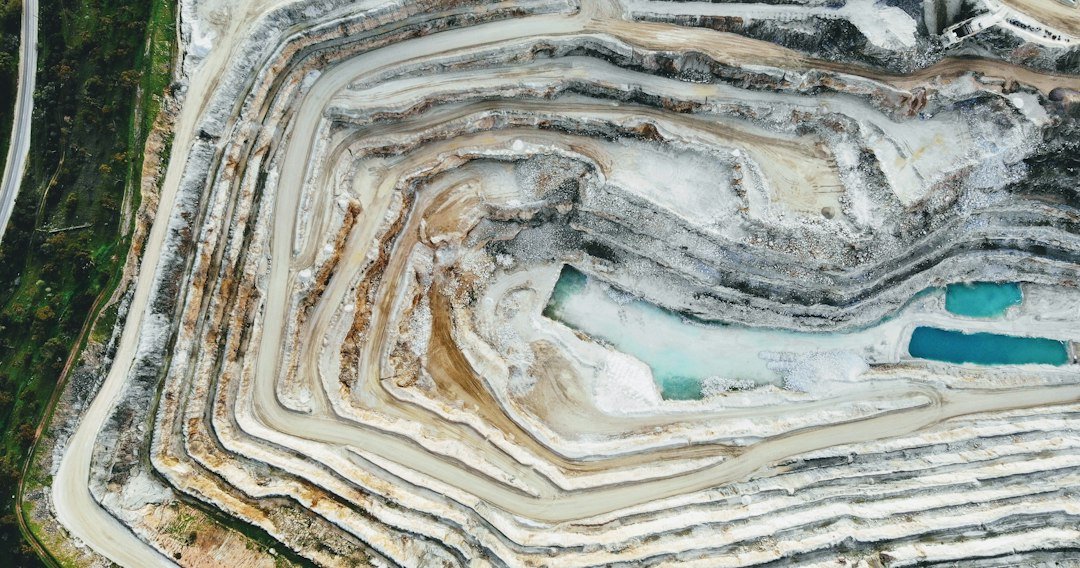
Open-pit slope stability is both a safety issue and a mine-economics issue. Pit walls, benches and ramps must remain serviceable as mining advances deeper and exposes changing rock conditions. A slope event can restrict access to ore, close a haul road, require waste removal or redesign, and delay production. Investors should therefore look beyond a single design angle and ask how geotechnical risk is studied, monitored and managed throughout the mine plan.
Evergreen investor education. This article does not describe GBDS pit designs, geotechnical conditions, permits, operating plans, costs or production forecasts.
Slope design begins with geology and water
Rock strength alone does not determine stability. Faults, joints, bedding, weathering and the orientation of discontinuities can create blocks or wedges that behave differently from intact rock. Groundwater can add pore pressure, reduce effective strength and complicate blasting or drainage. The appropriate bench height, berm width, inter-ramp angle and overall slope angle are therefore site-specific engineering decisions.
Western Australia’s open-pit geotechnical guideline emphasizes current geotechnical knowledge, methodology, instrumentation and ground-support practice. The U.S. NIOSH Mining Program likewise notes that large-scale rock-mass strength is difficult to evaluate and that major slope failures can occur with little warning. These sources support a core investor lesson: slope assumptions need continuing field verification.
Bench geometry is only part of the control system
Catch berms help retain falling material, while controlled blasting can limit damage behind the final wall. Drainage holes, pumping and surface-water diversion may reduce water pressure. Exclusion zones and alternate access routes can protect people and preserve operational flexibility. Steeper walls may reduce waste stripping and improve modeled economics, but they can also reduce tolerance for uncertainty. Investors should ask whether the reserve case includes practical wall-control measures, not merely an optimized pit shell.
Monitoring must lead to decisions
Common tools include survey prisms, extensometers, inclinometers, piezometers, satellite measurements, drones, visual inspections and ground-based radar. NIOSH research on ground-based radar for mine-slope monitoring evaluated radar as a way to detect slope movement and provide warnings. Technology, however, is not a substitute for a response plan: alarm thresholds, escalation paths, evacuation rules and authority to stop work must be defined before movement accelerates.
An SEC-filed technical report for the Marigold gold mine provides a real-world example from another operator. It describes radar coverage, programmed movement thresholds, notifications and continuing updates to the geotechnical management plan as mining progresses. This is illustrative industry disclosure, not a GBDS operating comparison.
A hypothetical disruption example
Hypothetical example: assume movement near a main ramp requires a 20-day closure while the area is assessed and stabilized. If standby, remediation and alternative-haulage costs average US$400,000 per day, the direct cost would be US$8 million. The total impact could be higher if ore access is delayed or lower-grade stockpiles are processed. This example is simplified, is not based on a GBDS property, and is not a forecast.
Investor due-diligence questions
Ask who prepared and independently reviewed the geotechnical model; how faults, weathering and groundwater were characterized; whether actual wall performance matches design; how monitoring coverage changes as the pit advances; what thresholds trigger action; whether alternate ramps or mining sequences exist; and how slope assumptions affect reserves, stripping requirements, capital and schedule. Also review disclosed slope events, remediation work and changes between technical studies.
Educational disclaimer: This material is for general information only and is not investment, legal, engineering, geological or financial advice. Mining investments involve geological, geotechnical, operating, environmental, regulatory, financing and commodity-price risks. Review qualified technical disclosure and seek appropriate professional advice before making an investment decision.