
Autonomous Haulage in Gold Mining: What Investors Should Evaluate
Autonomous haulage systems can change how a surface mine moves ore and waste, but “driverless” does not automatically mean safer, cheaper or more productive. For gold investors, the important question is whether the mine has integrated the technology into its operating plan, workforce, maintenance system and processing constraints.
Evergreen investor education. This article does not describe the equipment, operating plans or performance of any GBDS project.
Autonomous haulage is a system, not just a truck
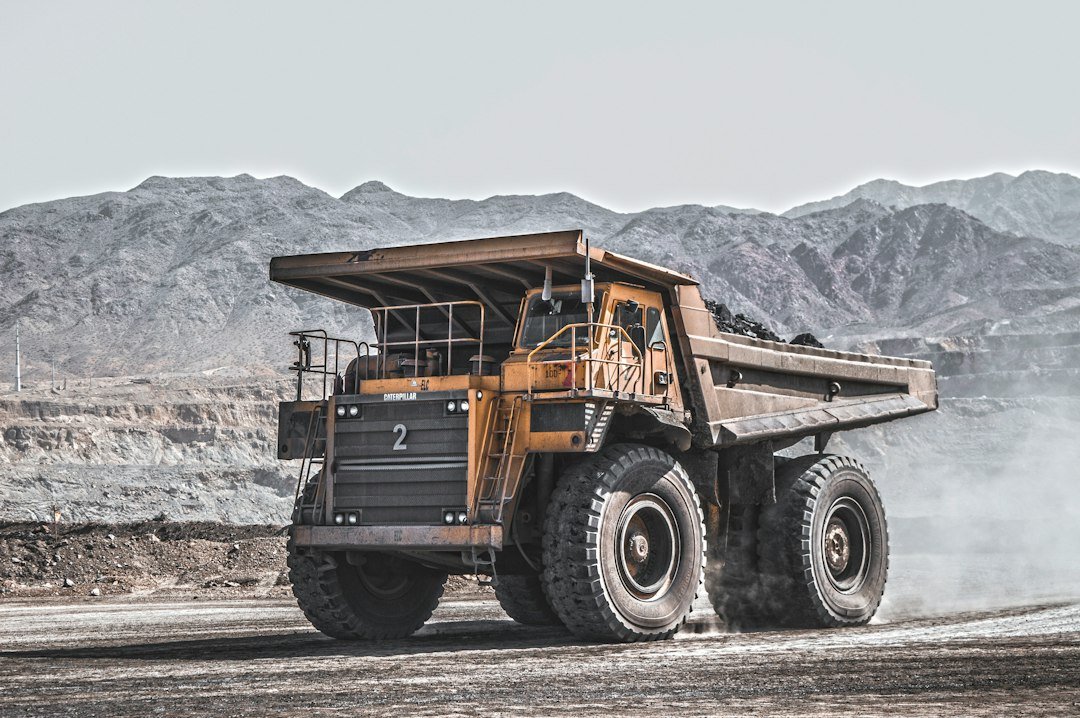
An autonomous haul truck normally operates within a larger system that includes fleet-management software, high-precision positioning, wireless communications, dispatch rules, obstacle detection, controlled operating zones and human supervision. Loaders, crushers, road conditions and maintenance facilities must also support the planned cycle.
The current ISO 17757:2019 standard, confirmed in 2024, addresses safety requirements for autonomous and semi-autonomous machines used in earth-moving and mining. Its scope includes the machinery, related hardware and software, supporting infrastructure and the defined operating environment across the system life cycle. That broad scope is a useful reminder: investors should assess the complete operating design, not a single equipment purchase.
Safety depends on operating controls
Removing a driver from a haul truck may reduce certain exposures, but automation also changes risk. Mixed traffic, people entering autonomous zones, communications failures, degraded positioning, maintenance lockout and emergency response all require clear controls. The U.S. Mine Safety and Health Administration reported that powered-haulage accidents accounted for 13 of 33 U.S. mining fatalities in 2025. That statistic covers powered haulage broadly, not autonomous trucks specifically, but it shows why haulage safety deserves sustained management attention.
Productivity gains must reach the bottleneck
A haulage system can potentially improve consistency by reducing shift-change interruptions and following repeatable speed, routing and dumping rules. Yet more truck availability creates value only if loading units, roads, crushers, stockpiles and the processing plant can accept the additional material. Higher movement of low-grade material or waste is not the same as higher gold production.
Hypothetical example: assume a 20-truck fleet improves average operating utilization from 70% to 77%. That is a 10% relative increase in utilization, but it does not guarantee 10% more gold output. If the crusher is already at capacity, ore grade declines, recovery falls or maintenance costs rise, the financial benefit could be smaller. These numbers are illustrative and do not describe an actual mine.
Brownfield conversions need special scrutiny
A new mine can design roads, communications, workshops and traffic separation around autonomy from the outset. An operating mine may need to retrofit infrastructure while production continues. Investors should ask how long the transition will take, whether autonomous and manually operated vehicles will share areas, what production disruption is assumed, and how employees and contractors will be trained for changed roles.
Investor questions that reveal execution quality
Useful disclosure goes beyond the number of autonomous trucks. Investors can ask for system availability, intervention frequency, cycle-time trends, network coverage, safety events, maintenance cost per tonne and progress against the approved ramp-up plan. They should also understand vendor dependence, software and cybersecurity responsibilities, spare-parts support, workforce consultation, regulatory requirements and the capital needed for roads and communications.
The takeaway
Autonomous haulage can be an important operating tool, but its investment value comes from reliable integration and measurable mine-wide results. The strongest case links safety controls, utilization, unit costs and downstream capacity to realistic production guidance. Investors should look for evidence from sustained operations rather than assuming that automation alone will improve margins.
Educational disclaimer: This material is for general information only and is not investment, legal, tax or technical advice. Mining investments involve commodity-price, operating, financing, regulatory, environmental and execution risks. Conduct independent due diligence and consult qualified advisers.